
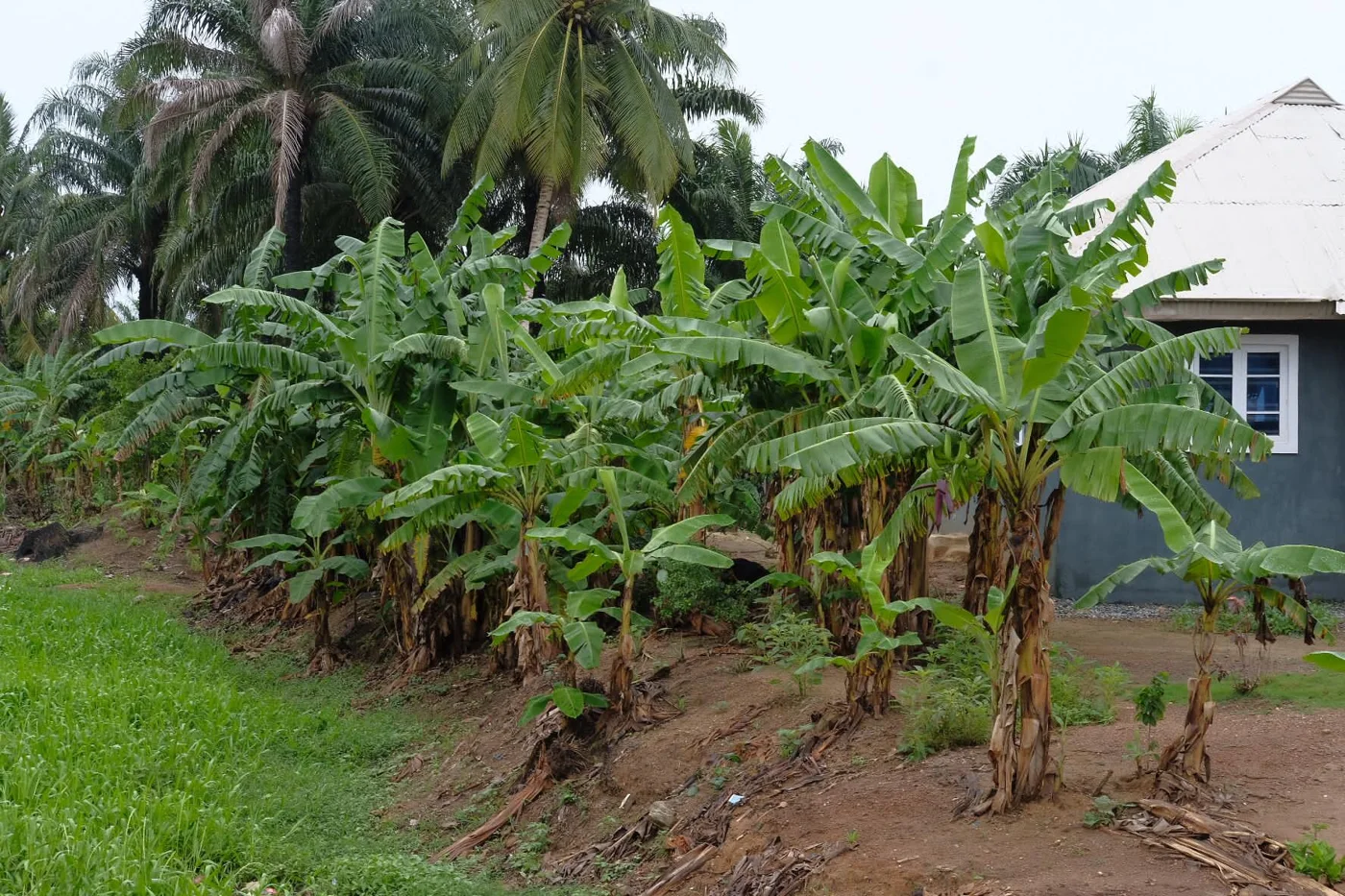

Plantain's versatility begins while it is growing and continues after the bunch is harvested. It can provide temporary shade for young cocoa, produce food for several markets, supply useful leaves, and yield fibre for manufactured products. Understanding how those roles connect gives us a better starting point for building businesses around the crop.
In Nigeria, we already appreciate plantain on the plate. We know dodo, boli, chips, and plantain flour. What I think deserves more attention is the whole plant and the different jobs it can do throughout its life.
Consider a young cocoa plantation. Plantain can help provide shade during establishment and produce fruit while the cocoa develops. Later, plantain leaves can serve food processors and cocoa fermenters. After a bunch has been harvested, the pseudostem can become a source of fibre, while suitable residues can return to the soil.
There is a commercial story running through that sequence. Some of its markets are familiar, some are already being developed by Nigerian entrepreneurs, and others need further research. Together, they make a strong case for taking plantain much more seriously as a versatile crop.
Its value can begin in a young cocoa plantation
Plantain has an established role as a companion crop for cocoa, particularly during the early years of a new or replanted plantation.
Its canopy can provide temporary shade while young cocoa establishes. The fruit offers food and a possible source of income during the period before cocoa becomes a dependable earner. IITA's guide to planting temporary and permanent shade in cocoa includes plantain among the food crops used for this purpose. A COCOBOD rehabilitation programme described by Ghana's landscape-restoration project also combines young cocoa with plantain and cocoyam for shade and supplementary income.
For a grower, that is an attractive combination: a crop that contributes to plantation establishment while producing something the household can eat or sell. Its value includes the role it plays alongside the longer-term crop.
The arrangement needs management. Plantain is temporary shade, and its population and canopy need adjusting as cocoa grows. Unmanaged suckers can create competition and crowding. CocoaSoils field observations from Nigeria describe thinning plantain to reduce competition and damage to young cocoa. Spacing, water availability, nutrition, and the developing shade system should guide the design.
That is the first part of plantain's versatility: it can contribute to another crop's production system before we have sold a single bunch. Once the fruit is ready, a different set of opportunities opens up.
The fruit can serve several markets as it ripens
Different stages of ripeness suit different products and customers.
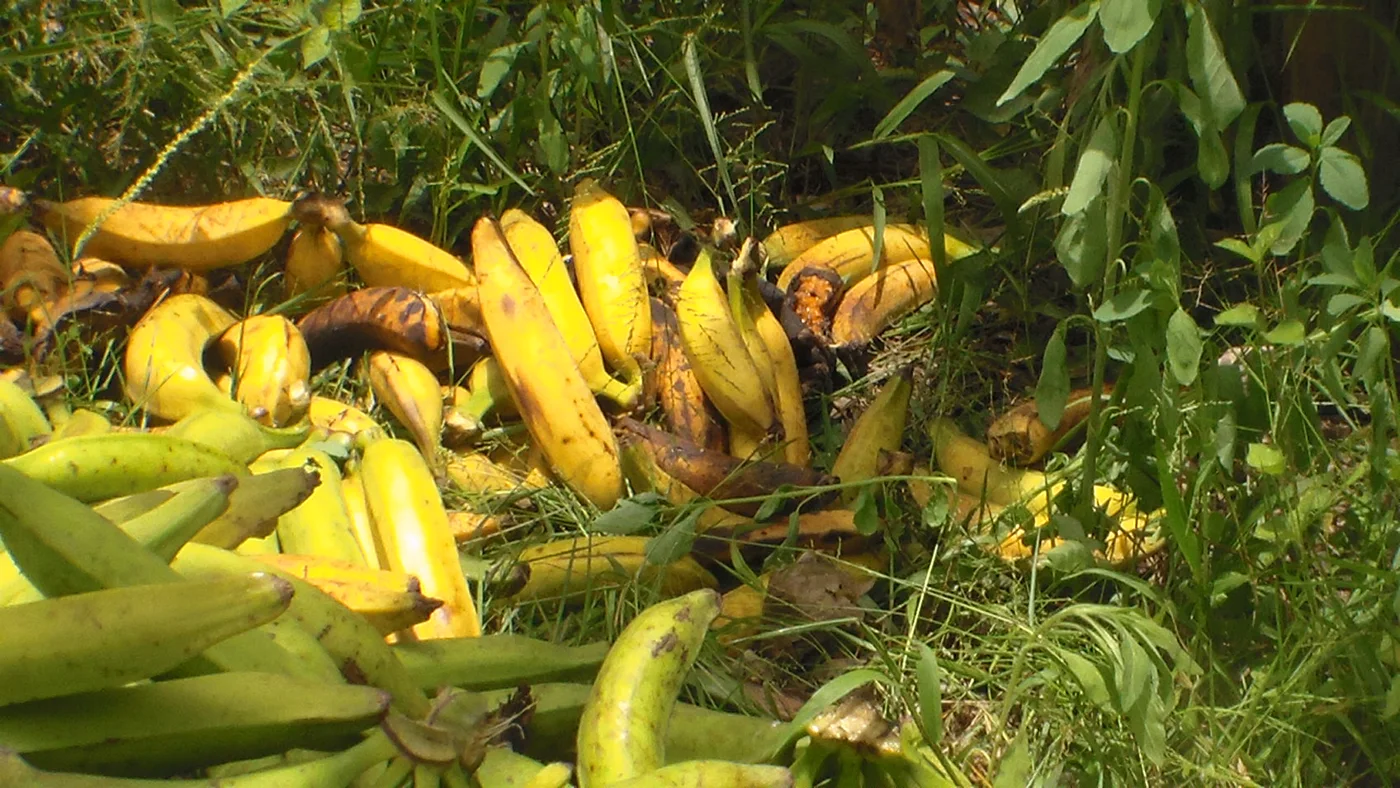
Green plantain can go into savoury chips, cooked dishes, dried slices, and flour. Flour creates opportunities with bakers and food processors. IITA's guide to value-added banana and plantain processing describes applications in bakery products, pasta, and noodles, including partial replacement of wheat flour.
Ripe plantain supplies the familiar markets for dodo, boli, sweet snacks, and prepared meals. Here, consistent ripeness matters: a restaurant wants predictable cooking results, while a snack producer needs reliable texture and colour.
Very ripe, sound fruit offers further possibilities in cakes, fritters, and other formulated foods. Nigerian researchers have studied plantain flour in cakes and overripe plantain processing in Ikire. Dodo Ikire already demonstrates how a later ripening stage can become a recognisable product.
Processing still needs wholesome fruit and a suitable recipe. Variety and ripeness affect how the ingredient behaves, so a successful flour or baked product needs its own formulation.
The business opportunity is to organise these outlets. Grade incoming fruit, know which customers want each grade, and move it to the right destination on time. That gives a grower or processor more options as the fruit changes, rather than leaving the whole harvest dependent on one market.

The leaves connect plantain to other food businesses
The connection to cocoa continues beyond shade. The Federation of Cocoa Commerce describes plantain leaves used beneath and over cocoa fermentation heaps. Plantain can therefore contribute at two different stages of the cocoa business: establishment in the field and fermentation after harvest.
Leaves also serve as wrapping and handling materials in suitable food processes. A study by researchers at Enugu State University of Science and Technology examined plantain leaves among the wrapping materials used for ogiri, a fermented condiment.
For an entrepreneur, this suggests a supply business with clear specifications: leaf size, condition, cleanliness, freshness, and delivery frequency. Caterers, condiment producers, and cocoa fermenters may have different requirements.
Collection needs to fit the farm's production plan. The living plant depends on its leaves to fill the bunch, so a leaf business should be planned with the grower. Food-contact handling also needs to suit the customer's process.
We have now moved from a growing crop to fruit and useful leaves. The next opportunity appears when the fruiting stalk has completed its job.
After harvest, the pseudostem can become a manufacturing input
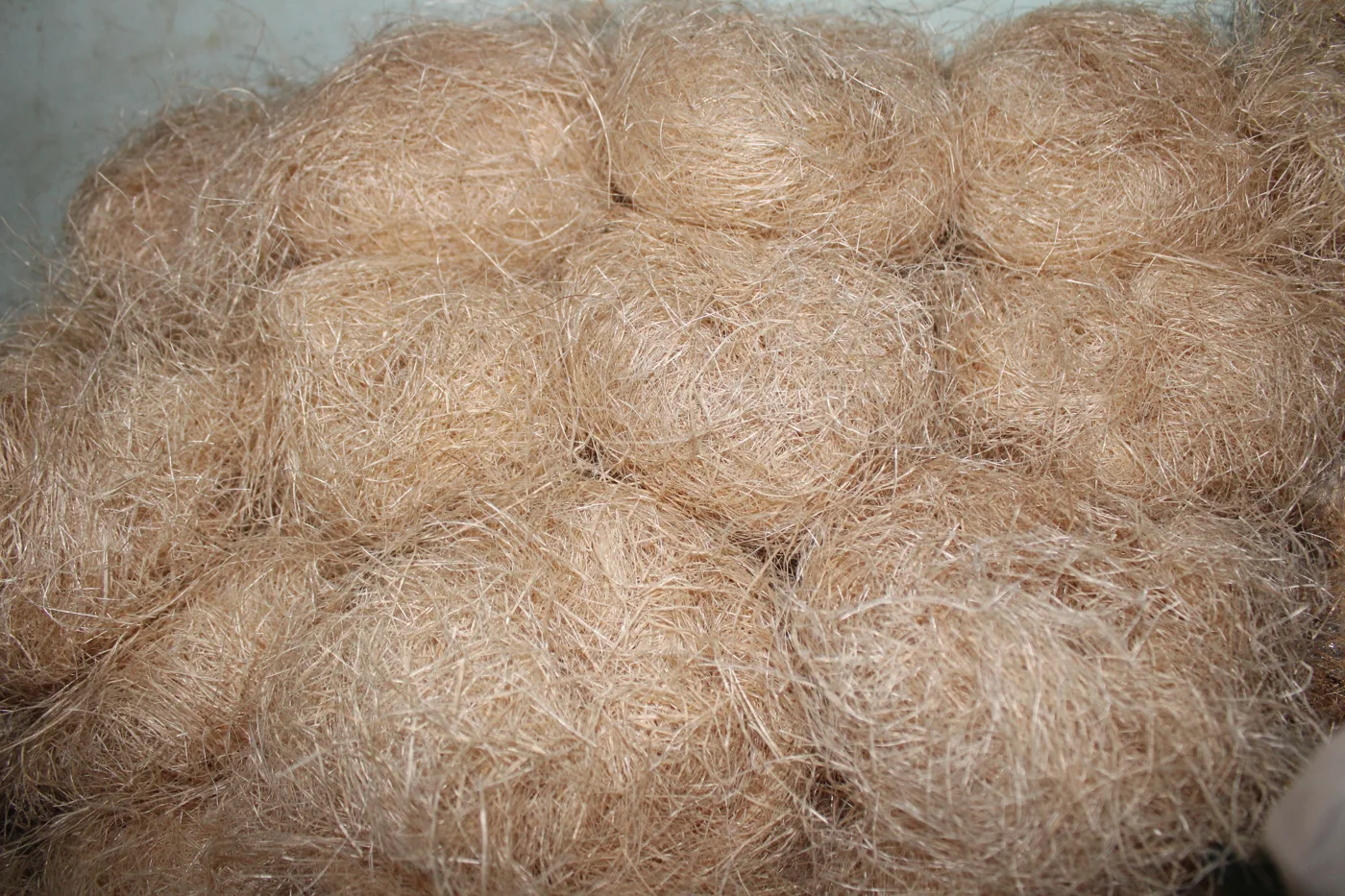
The thick stalk commonly called a plantain trunk is a pseudostem, made from overlapping leaf sheaths. It contains fibres that can be extracted and processed.
A 2024 study in Polymers investigated fibres, yarns, starch, and sap recovered from the Dominico Hartón plantain variety. That research helps explain why the harvested material attracts interest from product developers.
The evidence includes both plantain and related banana studies. I distinguish them below because variety, fibre treatment, and the intended product all affect performance. The common opportunity is to turn the harvested material into a consistent input that a manufacturer can use.
Hair extensions: a Nigerian example already taking shape
Tare Robinson Korumene of ECO-FIP Nigeria has developed hair extensions from plantain and banana pseudostem fibres. Her brand's current website presents the product as DUNNALLY, using plantain fibre from Bayelsa State. The company says it ships to distributors in Nigeria and overseas.
In Chidera Nwafor's April 2025 interview, she describes extracting and combing the fibre, then developing a softening and colouring process. She explains that the resulting material has its own texture. A product's usefulness depends on understanding those characteristics and finding customers who value them.
Her account also brings the economics into focus. At the time of the interview, manual combing constrained output even after the team had obtained an extractor. She described sample sales and support from friends and family while developing the operation. Access to stalks was the starting point; processing capacity determined how much finished product the team could supply.
She also demonstrated experimental pillow filling made from combing residues. That offers another outlet to investigate as the main product develops. The broader lesson is useful for Nigeria: growers, local equipment fabricators, fibre processors, and hair professionals can each contribute to creating value from the same crop.
Hygiene products: working businesses and further research
Hair extensions show how fibre can enter a consumer product. Its absorbent properties open another route, with working examples outside Nigeria.
If plantain value addition is something you're actively dealing with, The Green Circle is where operators, investors, and founders in this space compare notes.
Join The Green CircleSaathi in India sells banana-fibre sanitary pads. Its own impact page describes purchasing agricultural material from farmers and employing women in manufacturing. The Business Insider report on Saathi offers a visual account of production.
Sustainable Health Enterprises in Rwanda describes a model in which farmers supply processed banana fibre for the absorbent portion of its go! pads. Its production FAQ explains the roles of local manufacturers, distributors, and sellers.
Kodu Technology in Ghana provides a closer plantain connection. UNICEF's 2025 profile describes its pads made from discarded banana and plantain stems and the development of a market-ready product.
These examples show that fibre supply, processing, product assembly, and distribution can become connected businesses. They also show why the finished product matters. SHE explicitly distinguishes its biodegradable absorbent core from the complete pad and packaging, while Saathi markets its own products as biodegradable and compostable. Those claims depend on the particular design and materials.
Plantain-specific research is advancing too. A study in Fibers and Polymers, published online in 2025 and included in its 2026 volume, reported 810% absorption capacity for a treated plantain-fibre core against 700% for its commercial comparator. The plantain core nevertheless took in liquid more slowly and had lower retention. Those trade-offs are useful information for developing a complete product.
Researchers have also explored banana-and-cotton absorbent cores for baby diapers, presented at I-STEM 2019. That is an avenue for further development; it does not establish a finished Nigerian plantain diaper. A manufacturer still needs to achieve the required absorption, retention, comfort, and reliability.
For a local processor, a practical entry point could be supplying qualified fibre or pulp to an established manufacturer, then expanding as specifications and orders become clear.
Construction materials: another route for suitable fibres
The same crop can also interest a different customer: a materials manufacturer.
A 2024 experimental study of banana fibre and gypsum investigated lighter composites and changes in thermal and mechanical performance. This points towards development work on products such as plaster-of-Paris, or POP, panels. The study also found strength trade-offs, so it should guide trials rather than be treated as approval for any plantain fibre in any board.
There is Nigerian research using plantain pseudostem fibre in epoxy composites for low-stress applications such as interior panels and lightweight covers. Epoxy and gypsum are different materials, but both illustrate the potential for agricultural fibres in manufacturing.
For this outlet, the next step is collaboration with a board producer: agree a fibre specification, make samples, and test the finished material for its intended use. As with hair extensions and hygiene products, the opportunity develops through a particular customer's requirements.

Full use should support the next crop too
Following plantain through these uses also brings us back to the field.
Each fruiting pseudostem produces one bunch; selected suckers become the following crop. That growth pattern, explained in Tamil Nadu Agricultural University's cultivation guide, can support repeated harvests from a managed stand and a recurring supply of harvested material.
It also means production has to be planned. Variety, water, nutrition, crop health, and planting dates influence what a processor can collect. In a cocoa plantation, the growing cocoa and its changing shade requirements affect how long plantain remains in the system. A fibre operation needs a realistic supply plan rather than an assumption that every field will provide stalks indefinitely.
Some residues also have value where they were grown. A field study in southeastern Nigeria found benefits to plantain growth and yield from surface mulching. Retaining or returning suitable material can support soil management alongside sales. IITA also identifies pests and disease as major crop constraints, making planting-material health part of any expansion plan.
Fully using the crop therefore includes deciding what to sell, what to process, and what should continue supporting the farm.
How this compares with cassava, maize, and oil palm
Seeing those roles together is why I would place plantain alongside Africa's other versatile crops. A fair comparison should recognise the multiple uses they already have.
| Crop | Established food and processing routes | Further value from the crop | What matters commercially |
|---|---|---|---|
| Plantain | Fresh cooking markets, chips, flour, prepared foods | Temporary shade for young cocoa; food-use leaves; Nigerian fibre hair extensions; hygiene ventures and materials development | Farm design, fruit handling, and consistent inputs for each processing customer |
| Cassava | Gari, flour, starch, and other staple foods | Industrial starch applications, feed, and alcohol production | Processing efficiency and a buyer's flour or starch specification |
| Maize | Grain foods, meal, flour, and snacks | Animal feed, starch, oil, sweeteners, and ethanol | Grain quality, drying and storage, and access to processing markets |
| Oil palm | Palm oil and palm kernel oil | Soap inputs, kernel meal, and fibre or shells used for energy | Fruit collection, extraction efficiency, and markets for multiple mill outputs |
These uses are documented by IITA for cassava, FAO for maize, and FAO for palm processing, with palm kernel meal described by Feedipedia.
Oil palm already demonstrates the commercial value of several outputs from one crop. Cassava and maize also have extensive industrial uses. Plantain deserves a similarly broad assessment: food, a service within a farming system, useful leaves, and manufacturing inputs.
There is no single ranking that settles which crop is best for every Nigerian investor. The useful comparison is which combination of outputs, production costs, processing capability, and customers works in a particular location.
Turning versatility into a business people can buy from
Once we understand the range of uses, the commercial task becomes more focused: choose the part of the chain you can operate well.
A grower might combine plantain sales with cocoa establishment. A food processor might supply chips or flour to repeat customers. A collection business might coordinate harvested pseudostems, while a fibre processor supplies a hair or hygiene manufacturer. A product developer might work with a university and an established factory on a new material.
One business does not have to own every stage. The strongest starting point is a dependable customer for a specific output, followed by the production system needed to serve that customer.
For fibre, transport and recovery deserve close attention. The plantain study in Polymers measured approximately 91% moisture in its samples. That makes fresh stalk weight a very different measure from saleable dry fibre. Collection density, distance to extraction, drying, labour, power, and rejected material all affect the margin.
I would track the material from fresh pseudostem through extraction, cleaning, drying, and grading to the quantity the buyer accepts. Then I would compare the money received with the full cost of delivering it. In the fruit business, I would do the equivalent by grade and finished product. The same batch cannot earn revenue as fresh fruit, chips, and flour simultaneously.
The environmental case benefits from the same attention to the actual process. A 2025 life-cycle assessment of plantain-derived sanitary cores in Ghana found a higher footprint than conventional core materials under the conditions studied, with electricity and chemical treatment among the contributors. Improving a process requires understanding those costs and impacts, rather than assuming that a residue automatically produces a lower-impact product.
Start with a small production cluster and one additional outlet. Run the process across several harvests, record quantities and costs, and get buyer feedback and repeat orders. This is the same principle behind building an export business from Nigeria: establish what you can supply reliably and who values it.
For me, the cocoa example brings the whole argument together. Plantain can help establish a plantation, feed households, supply fruit markets, contribute leaves to fermentation, and provide fibre after harvest. Each role connects to a different customer or farming need.
Nigeria has room to build more of those connections. That is how plantain's versatility can translate into income for growers, work for processors and fabricators, and products with more value created locally.
Research checked on 5 November 2026. Sources distinguish established uses, producer accounts, and experimental applications. Commercial examples describe their own products and business models.